
This week, I’ve had a couple of my participants mention that they’re really struggling with Irritable Bowel Syndrome.
The exact cause of IBS is uncertain, but it is often linked to stress, a sensitive gut, and speed of digestion.
Although diet and medication changes can help, sometimes we can overlook one of the simplest remedies…. breathing!
Most of us don’t give breathing much thought. Our bodies do it automatically, so it must be OK, right? Not necessarily.
Now, if you’ve spoken to me lately, you may have noticed, I’m a little obsessed with the benefits of breathwork. As a certified breathwork coach, I can help with using the breath to sharpen mental focus, reduce stress, go to sleep, wake up and even improve athletic endurance and performance. However, for the purposes of this blog, I’ll try and stay on topic!
Breathwork can be used to stimulate the Vagus nerve, which is the longest cranial nerve in the body, running all the way from your brain to the large intestine. This nerve is responsible for switching your body from ‘fight or flight’ mode – your body’s natural stress response, into ‘rest and digest’ mode, by activating the parasympathetic nervous system (PSNS). This not only calms the body and reduces our heart rate, but can also sooth a sensitive gut.
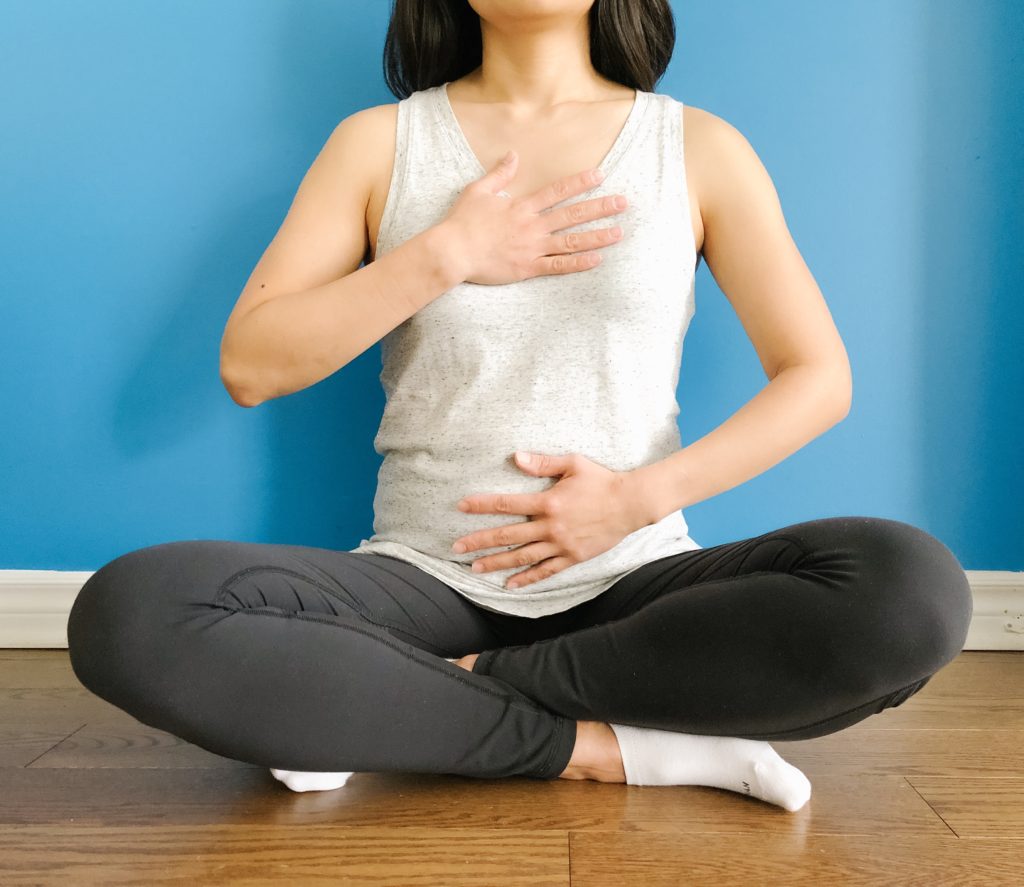
The most important factor in activating our PSNS, is diaphragmatic breathing… that is, breathing into the belly. Our diaphragm is a dome shaped muscle at the bottom of our ribs, that pulls the lungs downwards when we inhale, allowing the air to be drawn into the lower lobes of the lungs. The chest should rise least and last. Often, due to anxiety, lifestyle, or simply sitting at a desk all day, we can get into the habit of upper chest breathing, using our secondary breathing muscles and shoulders to do all the work. Now, I said I wouldn’t go off on a tangent, but in short, this can reduce oxygenation of the tissues, stall our PSNS and potentially contribute to a whole host of health issues, including IBS.
Secondly, we want to do our best to ‘nasal breathe’ as much as possible. Now, again, I could write a whole blog on this topic alone (that’s for another day) – but basically, unless you are working out super hard (high metabolic demand), it’s nasal breathing for the win. It helps activate the diaphragm, triggers the PSNS, dilates the airways & blood vessels and slows the heart rate.
Lastly, slow the breath – particularly the exhale. Sitting upright, or even better, lying down with knees bent and feet flat on floor, start by gradually slowing the breath a little. Count to 3 or 4 as you inhale, then the same for the exhale. Once you are comfortable with that, start to lengthen the exhale; perhaps breathing in for 3 and out for 6, or even 4:8. Feel the breath enter your nose and travel down to the belly. Feel the lower ribs expand, and then slowly, gently, allow the breath to fall.
So – in short – breath in and out through your nose (mouth is for eating, nose is for breathing) whenever possible. Breath in to your belly, and slow the breath.
If at any point you start to feel lightheaded or uncomfortable, just return to your normal breath pattern for a minute or two, then try again.
These simple techniques can trigger that ‘rest and digest’ parasympathetic nervous system, which will slow the heart rate, soothe the digestive tract and relax the mind and body. Magic!
For more tips, drop me a message (ask me about humming 😉
Managing a workforce? Contact me to discuss how I can help with relaxation, activation or exploratory breathwork sessions for your team!
 KITE FITNESS & WELLNESS